Search This Blog

Showing posts with label Ras Al Ghul. Show all posts

Tuesday, February 28, 2017

Filmland - Will the DCEU adapt Under the Red Hood?


If you liked this article, please like us on Facebook or follow us on Twitter and please consider Donating to keep the blog going

As we enter Phase 2 of the DCEU, it’s becoming increasingly clear that WB plans to back away from the broader scope of the DC Universe and zero in on 1 particular brand: Batman.  I’m aware that there are non-Batman films on DC’s docket, certainly, like Wonder Woman, Justice League, and Aquaman but those are outliers.  Looking ahead through the end of the 2010s it’s pretty clear which subsection of the DCEU is getting a legitimate push from executives. 

To put it bluntly- currently speaking The Batman, Nightwing, and Gotham Sirens all have directors attached, The Flash and Shazam do not.  What’s more, a fairly clear narrative is starting to form through the DCEU Batman properties, a connective story told in small parts across multiple films in the vein of Marvel’s first plotline during phase 1. 

This kind of thing has been thoroughly absent from the DCEU so far, there are tidbits of it here and there but stuff like Batman showing up in Suicide Squad to get information he already has doesn’t really stack up to the shared universe building between Thor and Captain America: First Avenger to establish the tesseract.  As for the building Batman story, it’s pretty clear that DC/WB is maneuvering its pieces to set-up for a, frankly, pretty obvious story- Under The Red Hood.


Sunday, July 24, 2016

Legends of Tomorrow S2 adds Legion of Doom


If you liked this article, please like us on Facebook or follow us on Twitter and please consider Donating to keep the blog going

One of the biggest stories of superhero TV in 2015 was the rise of Legends of Tomorrow, the first team superhero TV show to be produced in live action and not cut together from repackage Japanese TV like Power Rangers.  The first season was a pretty big hit, working through some ups and downs to deliver a fun and action packed family adventure show in the vein of Doctor Who or Power Rangers but starring a dynamic and unique team of lovable and engaging heroes. 

Now it’s season 2 time which raises a slew of questions, most especially because season 1 was so tied to defeating the immortal tyrant Vandal Savage and, spoilers, that’s what the team did at the end of that season.  This has raised the question of what season 2 will be about but the first details are now filtering through and, aside from a pretty interesting synopsis, the big news is that Legends of Tomorrow season 2 will feature the Legion of Doom as their new antagonists. 


Thursday, June 16, 2016

Josh Segarra Cast as Vigilante in Arrow S5


Edited by Robert Beach 

Yesterday, I talked about how CW is approaching the question of what to do with Arrow now that it’s been more or less eclipsed by its adjacent series. My suggestion was that CW is modeling Arrow after Daredevil, bringing in 2nd rate villains of more popular heroes like Ras Al Ghul and now introducing violent vigilantes ala Punisher in the form of Wild Dog.  

Well, CW seems to be doubling down on this approach by adding a second violent, street-level vigilante to the mix in the form of Adrian Chase, played by Josh Segarra. Much like Wild Dog, Chase is a low-rent Punisher knock-off from the ‘80s with possibly the most uninspired superhero name and gimmick of all time. He’s a hero so lame and non-descript his name is just a synonym for crime buster for he is…the Vigilante. 


Wednesday, June 15, 2016

Arrow Adds Rick Gonzalez as Wild Dog


Edited by Robert Beach 

How do you solve a problem like Arrow?  That might seem disingenuous given Arrow is the show that kicked off the CW-verse, a vast miasma of interconnected television shows that spans 4 series and a huge amount of characters; the likes we haven’t seen since the Star Trek triple threat of Next Generation, Deep Space 9, and Voyager in the late ‘90s, but hear me out.  As important as Arrow was to the origins of the CW-verse, there’s no denying at this point the show’s been outpaced by its own spin-offs. 

The Flash rushed ahead to become a massive favorite; Legends of Tomorrow brought superhero team action to life in a way never thought possible, and Supergirl is the best live-action adaptation of the Superman mythos since Superman 2. Arrow has little to do now, especially now that Ras Al Ghul has receded from the series’ emphasis. So how do you keep a show like Arrow relevant and interesting without just trying to rip-off Batman (like in seasons 1 and 2)? Well, obviously you do what worked in season 3, Arrow’s best season; you rip-off Daredevil.


Friday, June 10, 2016

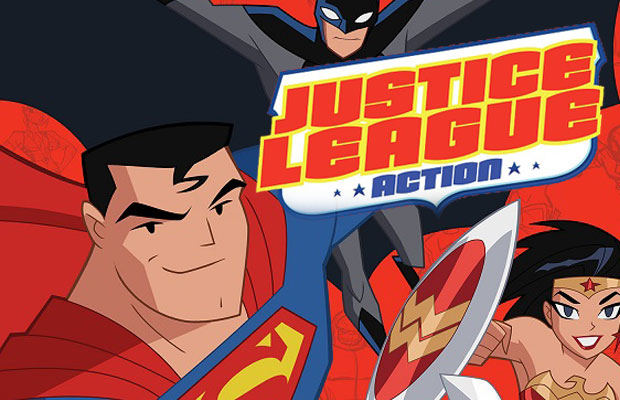
Justice League Action Character Roster Revealed


Edited by Robert Beach 

By now, you might’ve heard there’s a new Justice League animated series in the works called Justice League Action. Even though there hasn’t been an official Justice League show since the end of Justice League Unlimited, the team has been represented in subsequent media like The Batman, Batman: Brave and the Bold, and Young Justice.  

This new show will, apparently, be taking the team in a new direction, looking to bridge the gap between Justice League Unlimited and Batman: Brave and the Bold’s emphasis on obscure characters and the more cartoony and wacky animation styles of current superhero hit Teen Titans Go. Not much is known about the show, but we seem to have a tentative character line-up in the form of a character sheet leaked from the folks working on the series.


Thursday, June 9, 2016

Static Thoughts - 10 Possible Villains for Arrow Season 5

Edited by Robert Beach 

If there is one worthwhile name in DC comic adaptations in the 2010s, it’s the CW. By this point, they’ve created 2 incredibly great shows with The Flash and Legends of Tomorrow that perfectly adapt their respective source materials and are now taking on the responsibility of a 3rd great show with Supergirl. Unfortunately, all that excellence raises the question of what happens to CW’s original superhero show Arrow.  

Love it or hate it, Arrow is just treading water, an adjunct to a universe that no longer needs it. So far, the only thing that really made Arrow stand out was the inclusion of Ras Al Ghul as a new bad guy, following the Daredevil school of villain appropriation. Given that, it makes sense Arrow season 5 will keep ripping off Daredevil; this time trying to crib Daredevil season 2’s Punisher plot with a killer vigilante story of its own. Well, I’m not one to shy away from speculation. So here are 10 vigilantes we might see as the big bad of Arrow season 5. 


Saturday, April 23, 2016

Cover Story - Top 12 Azrael Covers


If you liked this article, please like us on Facebook or follow us on Twitter and please consider Donating to keep the blog going

Let’s talk about Azrael for a second.  Azrael is actually one of my favorite superheroes of all time.  A lot of this has to do with how I made the transition from animated superhero shows to actual adult comics.  One of my first exposures to adult comics was a series of audio Batman comics adapting various greatest hits, and I got a hold of a 3-part set that adapted the entire Knightfall Saga that introduced and established Azrael.  From that point on I was hooked on the character and, as luck would have it, he had an ongoing series at the time so it became the first comic I started buying monthly.  

That’s part of why it does wrangle a bit that modern versions like on Gotham or Arkham Knight seem so lacking.  It’s even more frustrating when so much of Azrael’s story plays like the good version of the Assassin’s Creed game plots so it’s not like he’s a character who needed a harsh reworking.  But, given those things have very momentarily catapulted Azrael into the public eye I’ll take what I can get to excuse a deep dive into the comic series that started me down this path with the top 12 Azrael comic covers.


Wednesday, March 23, 2016

Panel Vision - Trinity


Edited by Robert Beach

At the time of writing, the first reviews are coming in on WB/DC’s Batman v. Superman: Dawn of Justice. I haven’t read any of these, but judging by the critical consensus that’s slowly forming the word is…not good. We’ll see how that shakes out but if it’s any indication of audience reaction that could spell a major roadblock for the blossoming DC movie universe. Dawn of Justice isn’t just the first time Batman and Superman have met in live action, it’s also set to feature Wonder Woman making it the first appearance of the DC trinity in live action. 

The trinity (Wonder Woman, Batman, and Superman) are the cornerstones of the DC universe and comics as a medium. They represent the oldest and most recognizable superheroes ever created, so having their opening debut fall flat would be a massive slap in the face for WB and DC. So as we all wait with bated breath, I thought I’d showcase my favorite vision of the first meeting of DC’s big three: Matt Wagner’s Trinity.


Trinity was a prestigious graphic novel trilogy produced by DC in 2003, a date that’s kind of important for all the context stuff that goes into these look backs. Previously, Wagner made a name for himself writing the noir-inspired Sandman Mystery Theatre, the objective best vision of Sandman, for Vertigo comics from 1993 to 1999. At the time, DC was farming Vertigo comics for great talent to import to the main line, hence stuff like crazy Doom Patrol and Animal Man scribe Grant Morrison being handed the reigns of power on Justice League. In Wagner’s case, he had always been more of an independent author. So rather than taking up a monthly comic, he took up a project making 3 graphic novels telling the story of how Batman, Superman, and Wonder Woman first met. 

I’m not sure what people expected from this particular pitch at the start. Wagner’s most mainstream work at the time was a gritty ‘30s noir comic full of some really grimy crime fiction and barely any superhero elements. Conversely, Wager’s big independent book at the time was Grendel, another noir title only this time inflected with ninjas and copious amounts of violence. Given all that and the tone hovering over a lot of work in the early 2000s, no one would’ve expected Trinity to turn out to be a bright love letter to the core of these characters. They felt more at home in the bright lights and joy of the DC animated universe than the darkness of any of Wagner’s previous work.


The story at hand is superhero simplicity in its purest format. Ras Al Ghul is trying to end humanity to save the Earth from our degradation, pretty standard stuff from him. To accomplish his goal, Ras has recruited Bizarro, the failed Superman clone created by Lex Luthor thus drawing Superman into Batman’s investigation and raising the level of threat that Ras is posing. There are complications when Bizarro acquires a nuclear submarine for Ras and accidentally sets off a massive explosion close enough to Themyscira to impact the Amazons. That causes them to send Wonder Woman to investigate. With all three heroes drawn into the same hunt for Ras Al Ghul and his assembled weapons of destruction, the question becomes if they can get along long enough to stop Ras and save the world. 

Like I said, that’s about as straight forward a superhero story as one can possibly tell. The thing to remember, though, is that simplicity in superhero stories is actually a major boon to their storytelling.  There’s a tendency to view complexity of narrative as being tantamount to complex storytelling, that more plot equals more meaningful plots but that really isn’t the case. With superheroes, the impetus for meaningful and engaging stories has always been in the characterization. It’s not as important what the characters are doing so much as who’s doing it and how they feel and think about what it is their doing. In that case Trinity absolutely shines because it’s all about characterization.


The story is broken into three distinct parts, each one using a hero’s home town as a central setting and one of the heroes as the central lens for the stories events. The opening third is a Superman story, dropping us into this beautiful rendering of Metropolis combining the verve and life of ‘20s New York with the kind of Art Deco futurism that informed the early Superman cartoons. Everything is big deeds, big emotions, and big weirdness all filtered through the impetus of Superman’s actions and his very existence impacting people he’s never even met or been aware of. 

The second act drops us into Gotham City cut straight from the Batman animated series, police zeppelins and all. The entire issue takes place at night in murky shadows and scarred red skies with the super-powered elements feeling like weird outsiders to a foreign land. 

This sequence also features the book’s most brutal action sequence where Wonder Woman goes up against Bizarro, and we see just how terrifyingly powerful he is. Again, there’s the aspect of the universe darkening under Batman’s lens. And the showcase of the issue being essentially evil Superman, a parallel that becomes even clearer when Batman disables Bizarro with the most foreign thing in this universe: bright light.

The final issue drops us into Paradise Island as Ras tries to conquer it for super villain reasons. It’s an amazing contrast between the previous two segments, trading the gothic edifices of Gotham City or the gleaming towers of Metropolis for a vast marble culture cut into the living rock of the island. It’s a world of mythology and fantasy where nature itself serves as an ally of the Amazons, and we finally learn that Wonder Woman is also a princess. 


Aside from each issue being an individually excellent exploration of the character’s mythos and identity and how each of these different people could co-exist within such different worlds, the character interactions are just delightful. Something I really like about the series is Superman is the bridge character between Wonder Woman and Batman (both don’t get along). 

It’s a different take on things, but one that makes a lot of sense to me. Firstly, Wonder Woman and Batman are just inherently stubborn characters. Both of them come from worlds of extreme privilege and having to work their whole lives to maintain a level of insane perfection. 


Superman, on the other hand, has never tried to be better than everyone else. In fact, he has to work to be less than everyone around him as Clark Kent. As Clark, he can still be an impactful and well-regarded writer, but he can’t stand out as “the best in his field” for the very reason that helping others is more important than winning awards or recognition. Superman’s daily life is putting his ego to the side for the greater good.  

What’s more, he has to exist as both Superman (God among men), and Clark Kent (the most human person imaginable and a champion for truth). He essentially moves in both Batman and Wonder Woman’s world confronting the truth of humanity through his identity as Clark while also striding through the world of myth and madness as Superman. He’s the perfect equalizer.


Even putting aside all the great characterization and interpersonal relationships, this is just a really fun action-adventure story. The Ras Al Ghul stuff provides plenty of interesting team-up opportunities. And the fact Ras already guns for Superman means he’s always got an interesting plan to keep the Man of Steel busy if the story needs him gone to progress. What’s more, the action is really fun in a classic Silver Age type manner, including the highlight of Superman throwing Bizarro into a volcano. Speaking of the Silver Age, there are a handful of cool shout outs to early age comic stuff like that including brief cameos by Robin and Aquaman. 

The Silver Age connection actually ends pretty important overall to Trinity’s legacy. Though a sequel was never made, DC did produce a very similar series a few years later entitled DC: New Frontier.  New Frontier, by Darwin Cooke, is a lot like the sequel to Trinity that never happened. It emphasized the first meeting of various heroes filtered through the lens of Silver Age elements and DCAU levels of heroic ideals. Combine that with Cooke’s very similar artwork style to Wagner (big poses, solid lines, bright colors, sparse details giving everything a slightly cartoony affect), the two go hand-in-hand as explorations of the dawn of DC. 


Wagner himself went back to this particular well in two later instances with a pair of outstanding Batman mini-series entitled Batman and the Monster Men and Batman and the Mad Monk. I’ll probably showcase them later on, but they’re stellar explorations of Batman’s early days without needing to resort to Frank Miller/Batman Begins/Long Halloween-style storytelling that tends to infect that particular era of Bat history. Rather, the books read like a look into “how Batman got weird” pitting him against hulking monsters and vampires with a background emphasis on the development of stuff like the Batmobile and the Bat Signal. 


As for Trinity, DC eventually produced a lavish graphic novel release for the trilogy that I highly recommend picking up. We still seem to be obsessed with origin stories even today, and this is one of the best told origin stories for the three most important comic book characters of all time (sorry Wolverine and Spider-Man.) 

It’s just a great showcase of Wager’s superb artwork and Dave Stewart’s beautiful coloring.  If you’re looking for proof it’s easy to have these characters meet, disagree, but still come together without needing to resort to Batman worship or immature fisticuffs like so many modern tellings do, this is it. 

if you liked this article please like us on Facebook or follow us on Twitter

Thursday, November 5, 2015

Static Thoughts - DCAU Crossovers


So, this past Wednesday CW’s Arrow featured a one-off crossover with the cancelled Matt Ryan Constantine show in an episode called Haunted.  The episode was decent enough with most of the fun coming from just how gung-ho Matt Ryan was to both play John Constantine again and get to do all kinds of wizard shenanigans that he never got to sink his teeth into enough on his own show.  However, the episode got me thinking about the idea of crossovers in general, with a specific lens for the superhero genre.  Crossovers in superhero stories are as old as the genre itself mainly because “superhero” as a genre is so vague and open that it tends to absorb a ton of broader genres such as fantasy, adventure, sci-fi, and horror into it.  At the same time, crossovers have always been a great way for superhero TV to expand its world and test more obscure and bizarre characters who might not have found an audience otherwise.  The best example of this is from the DC Animated Universe that started with Batman: The Animated Series and concluded with the massive Justice League Unlimited, which included almost every DC hero imaginable (even Aztek got in there.)  I’m ranking the individual crossovers from the Batman and Superman shows. 


Monday, August 17, 2015

Static Thoughts - 10 Criminals & Masterminds We May See in Gotham Season 2

Edited by Robert Beach 

Gotham is a Batman prequel show from Fox. The main character of the show is Jim Gordon, but the show has slowly broadened its horizons to encompass the entire Gotham underworld.  In addition, there’s been a developing subplot around a shady misconduct at the highest levels of Wayne Industries as well as a mysterious foreign interest that’s able to pull the mob’s strings.

Combine all this with the various unresolved plot threads involving secret surgery islands and land deals and you end up with a show filled to the brim with crime bosses and criminal masterminds. With the second season looming, I thought of 10 bosses and brains we might see in Gotham season 2.